
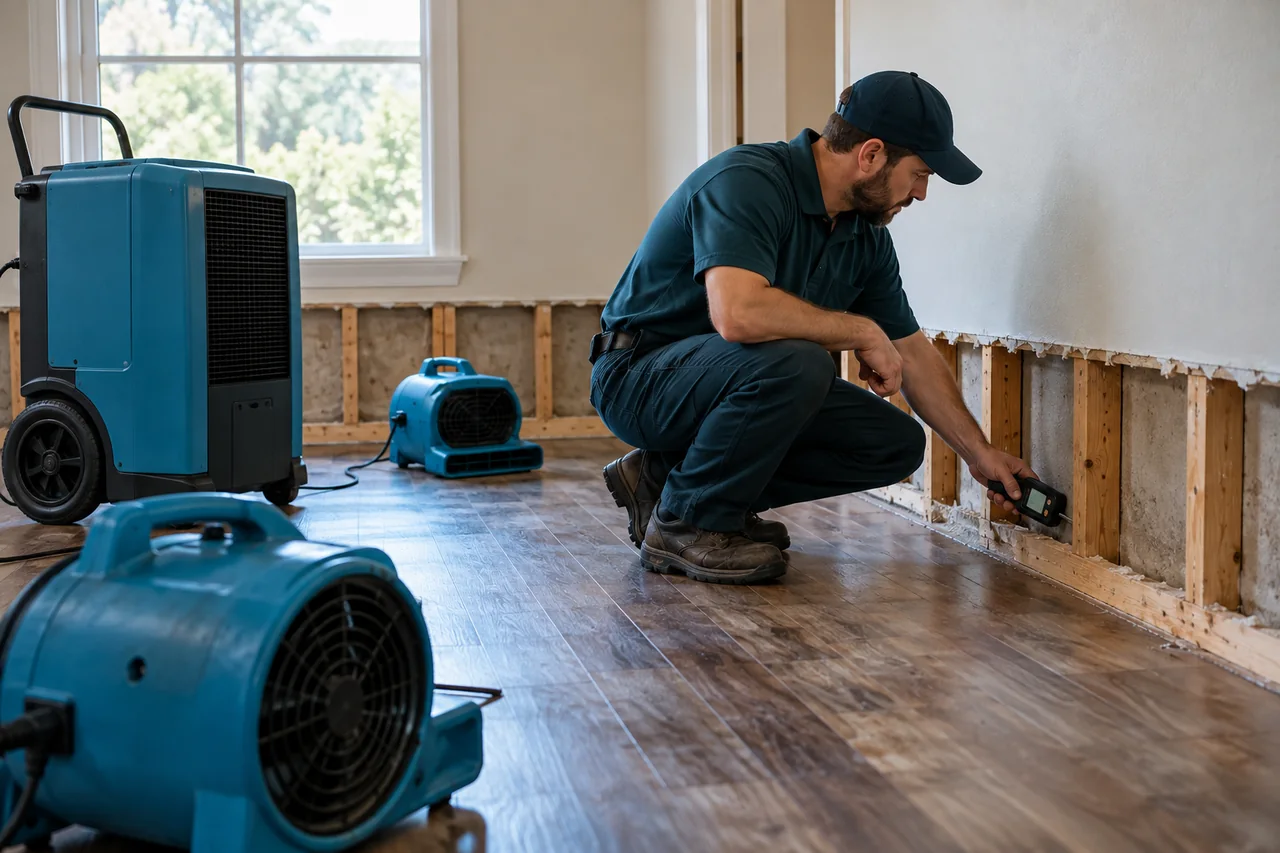
If water has entered the crawlspace under your Bothell home, the part you can see from the access hatch is usually only part of the picture. Water can sit in low spots, soak into insulation, and move along the ground under the house long after the floor above feels dry.
Homes on the valley floor, near North Creek and along the Sammamish River side of the city, can face an extra problem in the wet months. The ground around the foundation stays wet for longer, so moisture under the home can return even after the first round of drying.
This guide explains why drying in these homes often takes longer than a simple three day estimate, what you can safely do in the first hours, and what to document before any repair work starts.
Why the valley floor changes the drying job
Bothell is not one flat, uniform area. Some homes sit higher, on drier ground. Others sit lower, closer to creeks and the river, where winter rain keeps the soil saturated for weeks at a time. When the soil outside stays wet, the air and materials under the home stay damp too. That can slow down drying in three practical ways.
First, standing water in a crawlspace may be topped up from outside. A plumbing leak is one source, but groundwater pushing in at low points is another, and the two need different fixes.
Second, insulation that has fallen or become saturated holds moisture against the underside of the floor. Drying the air alone does not dry that material.
Third, a home can pass a quick surface check and still hold moisture deeper in the subfloor or at the base of walls. That is why repeat moisture readings over several days matter more than a single reading on day one.
Older homes and townhomes face different versions of the same problem
Many older Bothell homes have crawlspaces with limited access, older plumbing, and floor systems that were built long before current moisture barriers became standard. In those homes, the main risks are hidden standing water, saturated insulation, and slow drying under kitchens and bathrooms.
Newer townhome developments face a different pattern. Shared walls, shared rooflines, and drainage that serves several homes at once can mean that water entering one part of a building affects a neighbour as well. If your home is part of a homeowners association, tell the association early, in writing, because roof, gutter, and exterior drainage repairs may be their responsibility, while drying inside your home is usually yours.
What to do in the first hours
- Put safety first. If water may have reached electrical outlets, a panel, or appliances, stay out of the affected area and call for help first.
- Stop the source if you can do so safely. If the water is from plumbing inside the home, turning off the supply at the main shutoff can limit the damage.
- Do not pull up flooring or open walls yet. Take clear photos and short videos first, including the crawlspace access area, any visible standing water, and the rooms above it.
- Note the time you found the water, where it seems to be coming from, and which rooms are affected. This simple record helps later, whether you are speaking to a restoration team or to your insurance company.
- Keep children and pets away from the crawlspace area, especially if there is any chance the water came from a drain or sewer line. That kind of water needs a different, more careful cleanup. Our sewage cleanup page explains why that distinction matters.
- Call for an assessment. The sooner standing water is removed, the less time moisture has to move into materials that are expensive to replace.
What a careful drying plan should include
A careful plan is written down, not just described on the phone. It should say where the water came from, which materials are wet, what will be removed and what will be dried in place, and how progress will be checked. Ask for readings to be taken again on later visits, not only at the start. If readings rise again after equipment is removed, that is useful information, not a failure to hide. It usually means the ground under the home, or a hidden pocket of moisture, is still feeding the problem.
If you want the general order of work, our guide on what to do after water damage covers the first steps for the whole home, and our page on water extraction and structural drying explains the difference between removing water and drying the structure. The two jobs are related, but they are not the same job.
The county question Bothell homeowners should ask early
Bothell sits across two counties. Two homes on nearby streets can fall under different building departments for repair permits. Mitigation, meaning stopping the water, removing it, and drying the home, is urgent and should not wait. Repairs that change structure, plumbing, or electrical work can need a permit, and filing with the wrong county wastes time. Before repair work is booked, confirm which county your own address sits in, and ask whoever is doing the repair work to confirm the permit route for that address. Keeping that one question at the start prevents delays later, when wet materials have already been opened up.
Questions to ask before you agree to a drying plan
- Where exactly did you find moisture, and how did you check it?
- Is any insulation saturated, and what is the plan for it?
- How many days of drying do you expect for this home, and what could make it longer?
- When will readings be checked again, and will I get a copy of them?
- What needs to happen before flooring or walls are closed up again?
Clear answers to these questions protect you more than a fast promise does.
When to treat it as urgent
Treat crawlspace water as urgent if the water is still rising, if it may involve a drain or sewer line, if you can smell a strong musty odour in the rooms above, or if floors feel soft or uneven. In those cases, start with our emergency water damage page, or call Rainline Restoration on (425) 738-3553. The site serves Bothell addresses in ZIPs 98011, 98012, and 98021.
Questions about crawlspace drying
Why does a Bothell crawlspace take longer to dry than a regular room?
The ground under valley floor homes can stay wet for weeks in the rainy season, and saturated insulation and subfloor materials release moisture slowly. Repeat readings over several days are the reliable way to know when drying is complete.
Do I need a permit for water damage repairs in Bothell?
Urgent mitigation does not wait for a permit, but structural, plumbing, or electrical repairs may need one. Bothell addresses fall under two different counties, so confirm which county your address sits in before repair work is booked.
Can a crawlspace dry on its own if I just wait?
Small, clean water incidents sometimes dry, but standing water, saturated insulation, and slow ground moisture usually do not resolve safely on their own. Waiting raises the risk of odour, material damage, and mould growth in the floor system.