
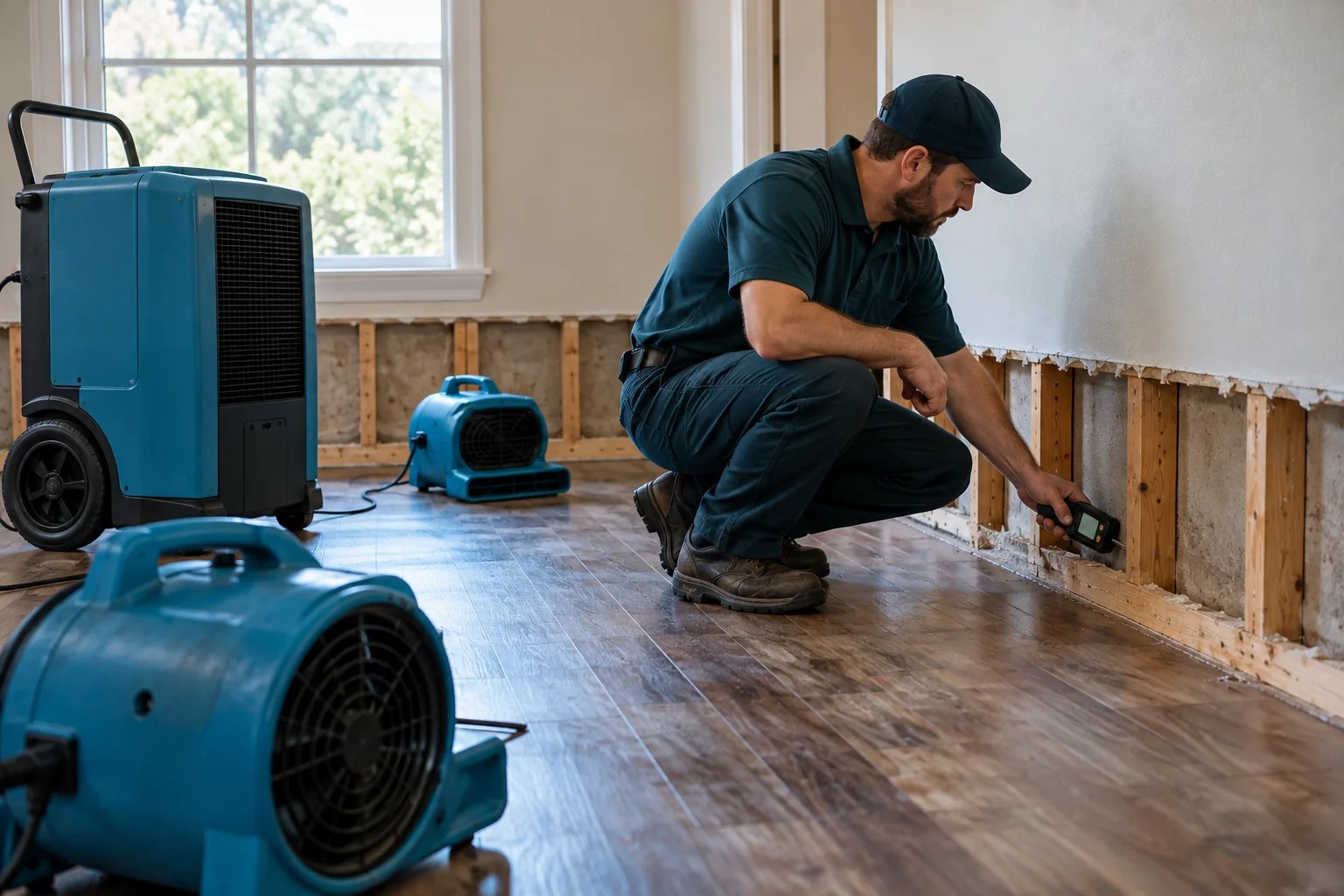
Structural Drying & Dehumidification in Bothell, WA
A dry-looking surface does not always tell the whole story.
Call (344) 556-7683Start with the conditions at your property.
Different water sources and affected materials call for different questions. The sections below explain what to observe, what to ask and how to prepare for a useful call.
Why moisture can remain
Water can reach floor assemblies, trim, drywall and other porous materials. The extent of wet material depends on how the water entered and how long it remained.
Assessing affected materials
A useful drying plan begins with identifying affected materials and checking conditions over time. Ask what will be measured, which spaces are accessible and how progress will be documented.
Planning the next stage
Removal of standing water and drying are separate steps. Once conditions are assessed, discuss which materials can remain, what needs additional work and whether later repairs are required.
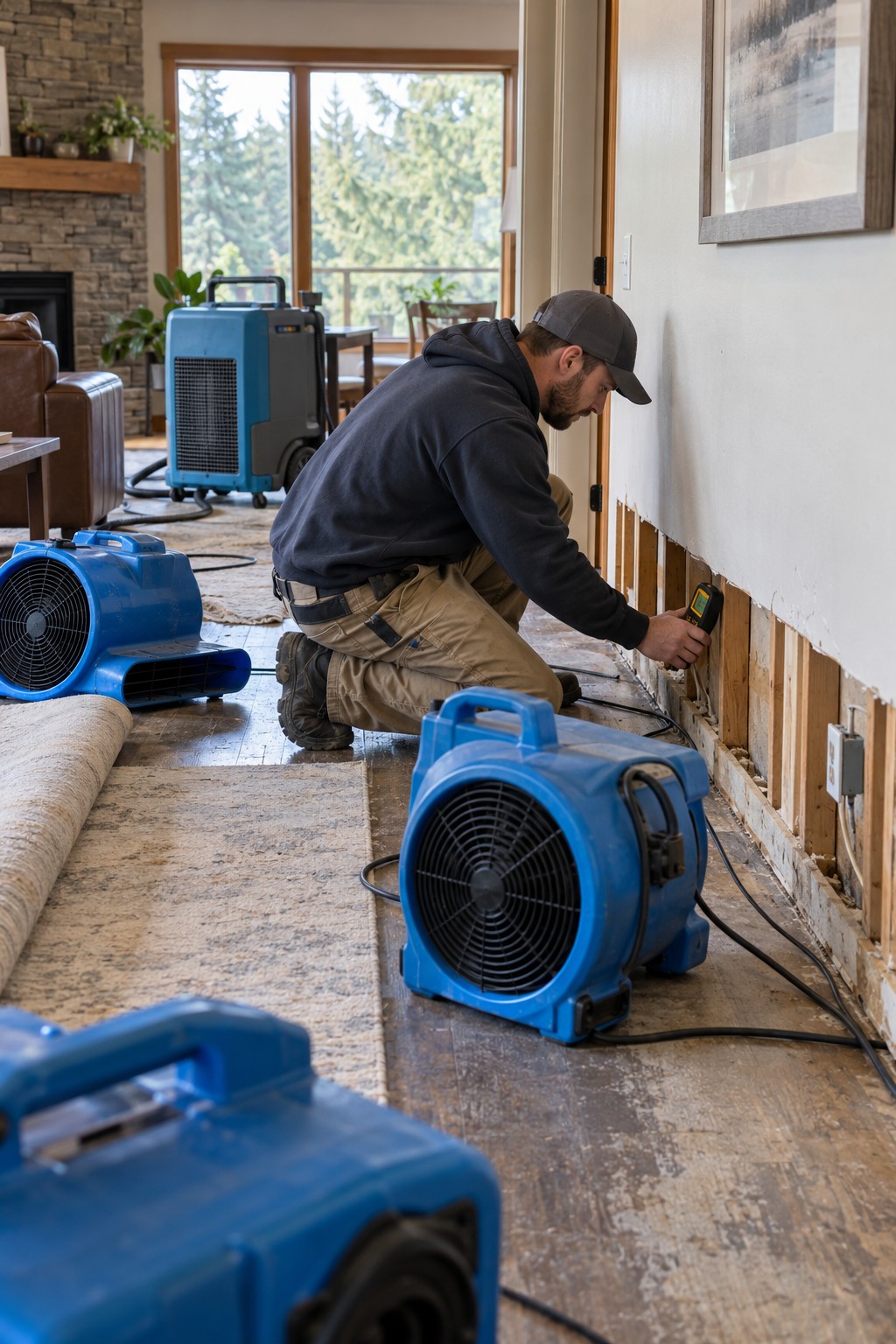
Drying starts with knowing which materials are wet.
A surface may feel dry while a floor assembly or wall base still needs attention. An assessment helps distinguish visible water from moisture retained in materials.
Locate affected materials
Describe the wet flooring, trim, walls and nearby rooms.
Ask how progress is checked
Discuss accessible spaces and how changes in moisture will be measured.
Review what comes next
Find out whether any materials need repair once their condition is understood.