
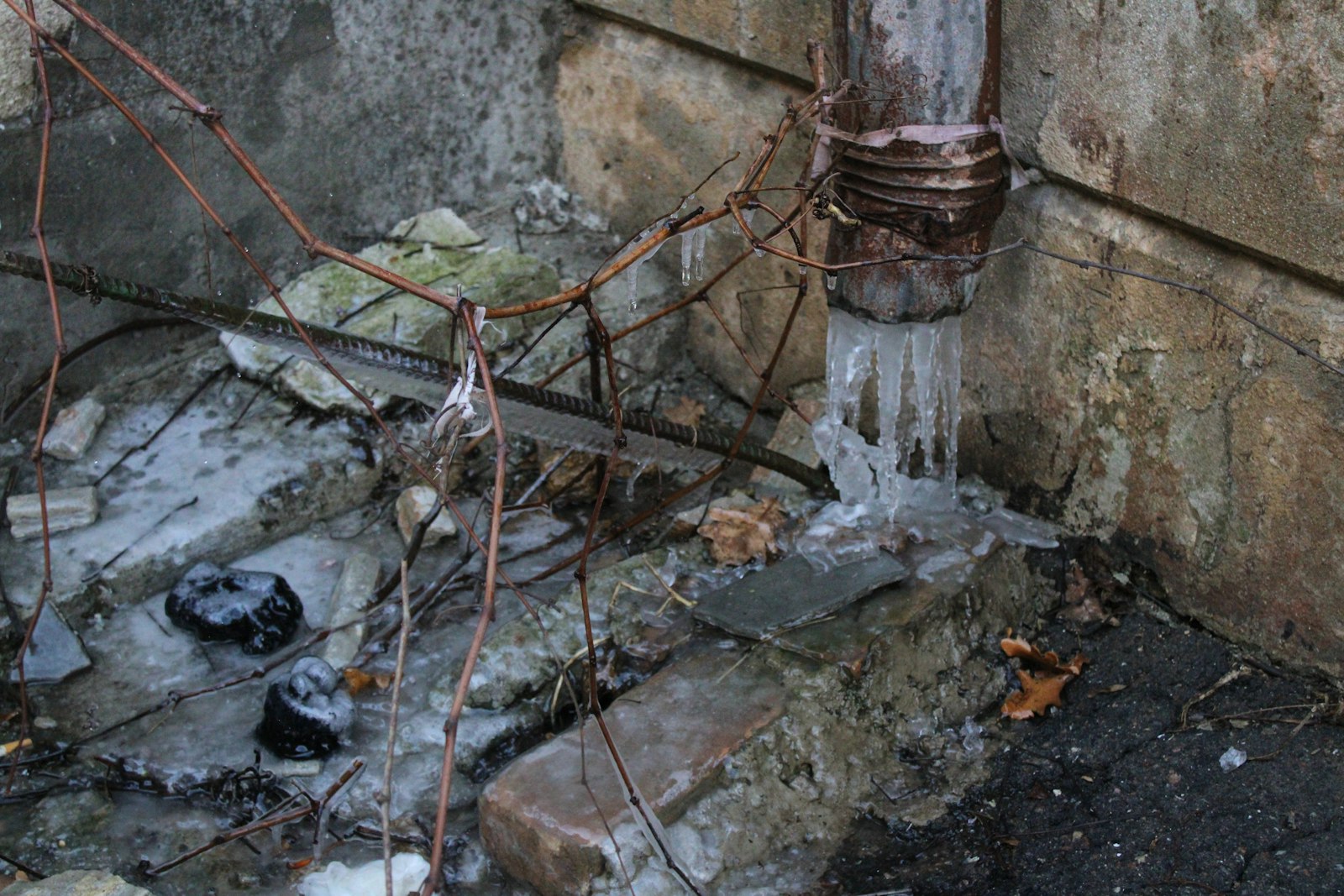
Bothell does not freeze often, and that is exactly why a hard freeze causes so much damage here. Pipes that survive a normal winter can fail in a single cold snap, especially in exterior walls, garages, crawlspaces and unheated rooms. The break itself is usually small. The damage comes from the hours of water that follow it, running inside walls, under floors and into ceilings before anyone notices.
This guide is written for Bothell homes in ZIP codes 98011, 98012 and 98021. It covers which pipes freeze first in this area, what to do in the first hour after a burst, how drying is verified with readings, and what to check before the next cold night. It does not promise a response time or a price. It explains the work, so you can judge it.
Why Bothell pipes freeze
Water expands when it freezes. In a closed pipe, that expansion builds pressure until the pipe splits, usually at a weak point such as a joint, a valve or a section that was already stressed. The split often happens while the water is still frozen. The flood starts later, when the ice thaws and water flows through the break.
Three Bothell patterns make this worse. First, many homes have plumbing in exterior walls, where the pipe sits close to cold outside air with only insulation and drywall between it and a freezing night. Second, ground floor rooms over crawlspaces often have supply lines running through a cold, ventilated space underneath, which is the same space our crawlspace drying guide covers. Third, garages, laundry rooms and bonus rooms over garages are often heated less than the main living areas, so a pipe there can freeze while the rest of the house feels fine.
A home that is empty is at higher risk than a home that is lived in. No one opens a tap, no one notices a cold room, and no one hears water running. A burst pipe in an empty home can run for days, which is why the away from home section below matters as much as the insulation section.
Which pipes freeze first
Exterior wall supply lines are first on the list, especially kitchen and bathroom lines on a north or wind exposed wall. Next are pipes in unheated spaces: garage hose bibs and laundry lines, pipes in a crawlspace, and lines serving a room over a garage. Outdoor hose bibs and the short pipe behind them are a classic starting point, because they sit at the edge of the heated envelope.
Pipes that rarely cause trouble in normal weather can still fail in a hard freeze. A line that has been fine for years may have a section with thin insulation, a small air leak from outside, or a valve that lets cold air in. That is why a freeze guide cannot rely on age alone. Location matters more than age.
Before the cold: five checks that actually help
First, find your main water shutoff now, not during an emergency, and make sure every adult in the home knows where it is and how to turn it. A shutoff that no one can find is no shutoff at all. Test it gently once, so you know it moves.
Second, disconnect outdoor hoses before a freeze and drain the hose bib if your home has that type. A hose left connected traps water in the bib and the short pipe behind it, which is exactly where a freeze starts.
Third, insulate exposed pipes in crawlspaces, garages and unheated rooms with pipe insulation sleeves, and seal obvious air leaks near those pipes. Insulation slows freezing, it does not make a pipe freeze proof, so it is paired with heat and water movement, not used alone.
Fourth, on a forecast freeze night, keep the home heated at a normal living temperature, including rooms that are rarely used, and open cabinet doors under kitchen and bathroom sinks on exterior walls so warm air reaches those pipes. Letting a tap drip slightly on a vulnerable line can help, because moving water freezes more slowly than standing water, but dripping is a precaution, not a fix for an uninsulated pipe.
Fifth, if you will be away, do not turn the heat off. Keep it at a temperature that protects the pipes, ask someone to check the home, and consider a simple water leak sensor near the water heater, the washing machine and any vulnerable line. A sensor does not stop a leak, but it shortens the time before someone knows.
The first hour after a burst pipe
Stop the water first. Turn off the main shutoff, or the fixture valve if the break is clearly at one fixture and that valve works. Then turn off power to any affected area where water has reached outlets, switches or the breaker panel area, and stay out of standing water near electrical sources.
Next, protect what can be protected. Move rugs, electronics, papers and furniture out of the wet area if it is safe to do so. Photograph each room from the doorway, then close up on the break if it is visible, the wet walls and floors, and any ceiling staining below. Those photos, taken before cleaning starts, are the record that matters later for insurance questions. Our insurance guide for Washington homeowners explains what sudden pipe failures usually mean for a claim, and what records help.
Then start the drying conversation, not the repair conversation. Extraction comes first: standing water is removed, then wet materials are checked with moisture meters. A floor that looks dry on top can still be wet underneath, which is why our floors guide explains save or replace decisions by floor type, and why readings are compared with a dry area of the same home rather than judged by touch.
Do not rush to tear out walls or floors in the first hour unless they are unsafe. The first hour is for stopping water, staying safe, documenting, and getting extraction started. Removal decisions are better made after readings show how far the water travelled, including sideways under flooring and up inside walls, which is often further than the visible stain suggests.
How drying is verified after a freeze burst
A burst pipe is clean water at the source, but it does not stay a simple job when it runs for hours. Water wicks up drywall, runs under flooring, soaks insulation and reaches the subfloor and, in ground floor rooms, the crawlspace below. That is why verification uses readings, not time.
A dry reference is taken in an unaffected room with the same type of material. Readings are then taken across the wet area, including walls, floors and the subfloor where it can be reached. Readings are repeated on later visits, so the trend is visible. When the wet area readings are back near the dry reference and the trend is flat, drying is done. Keeping a short written log of those readings, with dates and rooms, is the record that helps most with later questions.
In Bothell crawlspace homes, the crawlspace check is part of the same job, not an extra. A ground floor that dries while the crawlspace underneath stays wet will not stay dry. Our crawlspace guide explains that link in detail. In townhomes, a burst in one unit can travel through shared walls and floors, so the neighbouring unit may need checking too, even when its own pipes never froze.
The Bothell detail competitors skip
Most Bothell pages about frozen pipes give one of two things: a short bullet from a plumbing page, or a case story from another city. A plumbing page will tell you to call a plumber, which is right for stopping the leak, but it will not explain structural drying, readings or floor decisions after the water stops. A case story from a vacation home in another city will not explain Bothell crawlspace lines, garage lines or townhome shared walls.
None of the top Bothell pages found in this research gives a Bothell specific freeze guide that joins all three parts: which local pipe locations freeze first, what to do in the first hour, and how drying is verified with readings, for Bothell ZIP codes only. That is the gap this guide fills. It is also a seasonal guide. It is published ahead of winter, when a Bothell homeowner can still find the shutoff, insulate a crawlspace line and check a hose bib before the first hard freeze, rather than during it.
When to stop and call
Stop and call for help when water has reached electrical outlets or the breaker panel area, when a ceiling is sagging or a floor feels soft underfoot, when you cannot find or turn the shutoff, or when the source is still running and the water is spreading. Those are safety and structure problems, and they come first.
For Bothell homes in 98011, 98012 and 98021, call Rainline Restoration at (425) 738-3553. The contact page has the full details.
Questions about winter freeze and burst pipes in Bothell
Why does a pipe burst after the freeze, not during it?
The ice creates pressure that splits the pipe, and the flood starts when the ice thaws and water flows through the split.
Which Bothell pipes freeze first?
Exterior wall supply lines, pipes in crawlspaces and garages, and lines serving rooms over garages, especially on a wind exposed wall.
Should I turn the heat off when I go away in winter?
No. Keep the home heated at a temperature that protects the pipes, and ask someone to check the home.
How do I know the walls and floors are really dry?
By moisture readings compared with a dry area of the same home, repeated over visits, not by touch or by time alone.
Is a burst pipe different from river flooding?
Yes. A burst pipe starts as clean supply water, while river and flood water is contaminated and is handled differently, which our Sammamish River and North Creek guide explains.
For more general answers, see the frequently asked questions page.