
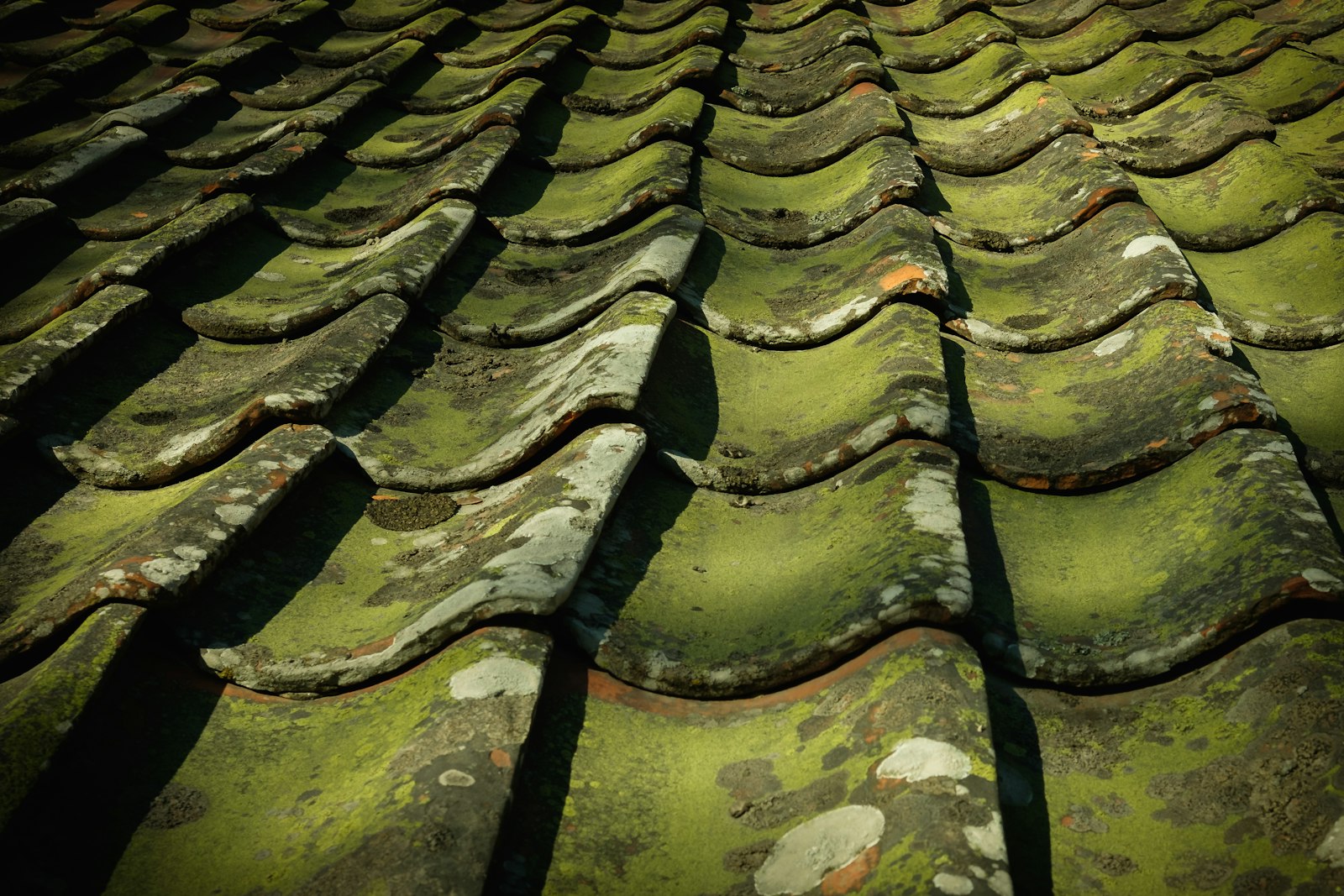
Roof leaks in Bothell rarely start with a storm. They start with moss, a clogged gutter, and months of steady rain.
Bothell gets long, wet winters. Rain falls for days at a time, and the Sammamish Valley stays damp long after the sky clears. On a roof, that steady moisture grows moss. Moss holds water against the shingles, lifts their edges, and lets water creep underneath. Gutters fill with needles and leaves from the firs and cedars around North Creek and Canyon Park, and when a gutter overflows, water runs down the fascia and into the wall behind it.
Most Bothell roof leaks are slow. There is no dramatic hole and no sudden flood. A stain appears on a bedroom ceiling, a musty smell grows in the attic, or a patch of paint starts to bubble over a window. By the time a homeowner sees the stain, water has often been travelling inside the roof for weeks.
This guide explains how to read the stain, how to tell a roof leak from a gutter problem, a plumbing leak, or attic condensation, what to do in the first hour, and how drying is verified with readings instead of guesswork. It is written for Bothell homes in ZIP codes 98011, 98012, and 98021, including Downtown Bothell, Canyon Park, North Creek, Westhill, and Queensborough.
How a Bothell roof leak usually starts
Four causes cover most of the roof leaks seen in Bothell homes.
Moss on the shingles. Moss is the classic Bothell roof problem. It grows thick on north facing slopes and under tree shade, and it holds a mat of water against the roof surface. Over time it lifts shingle tabs, opens the joints between them, and lets wind driven rain work underneath. A roof can look sound from the street while moss is quietly lifting shingles on the shaded side.
Clogged gutters and downspouts. When a gutter is full, rainwater has nowhere to go. It spills over the back edge, runs behind the fascia board, and soaks the top of the exterior wall and the roof edge. In winter the overflow can freeze at the eave and push water further under the shingles. The leak often shows up inside as a stain near an outside wall or over a window, not in the middle of the ceiling.
Failed flashing. Flashing is the thin metal that seals the joints where the roof meets a chimney, a skylight, a vent pipe, or a wall. It moves as the house settles and the seasons change, and the sealant around it dries and cracks. A flashing leak is often small and steady, and it can run along a rafter for several feet before it drips, so the stain on the ceiling may sit far from the actual gap.
Worn shingles and underlayment. Bothell roofs take a beating from nine months of rain a year. Shingles lose their granules, curl at the edges, and crack. Underlayment, the layer beneath the shingles, ages faster where moss and standing water sit on it. Once water gets past both layers, it reaches the roof deck and the attic.
A fifth cause is worth naming because it is often mistaken for a roof leak: attic condensation. Warm, moist air from the house rises into a cold attic, condenses on the underside of the roof deck, and drips onto the insulation. It looks like a leak, it stains ceilings, and it feeds mold, but no hole in the roof caused it. The fix is ventilation and air sealing, not a new roof.
Reading the stain: what the ceiling is telling you
A ceiling stain is a record of the leak. Read it before you touch anything.
A brown ring with a darker edge. This is the most common roof leak stain. Water carried dirt and tannins from the roof deck and dried in a ring. A single ring usually means one wetting event or a slow, steady drip. Concentric rings, one inside another, mean the leak has wet and dried several times.
A stain that grows after rain and shrinks in dry weather. This points to the roof or the gutters. The stain is active, and the leak is still open. Mark the edge of the stain lightly in pencil and check it after the next rain. If the edge moves, water is still coming in.
A stain that stays the same size but never dries. This can mean trapped water above the ceiling, or a leak that drips so slowly the stain never gets a dry spell. Press the area gently. If it feels soft, spongy, or cold and damp, water is still sitting above it.
A bulge or sag in the ceiling. This is the one sign that needs immediate care. A sagging ceiling is holding water, and the weight can bring the drywall down without warning. Do not press it, do not poke it, and keep people and furniture out from underneath it. This is the point to call for help and to protect the room below.
A stain near an outside wall or over a window. This often traces back to a gutter, a fascia board, or flashing where the roof meets the wall, rather than to the middle of the roof. Check the gutter above that wall first.
A stain in the middle of a room, far from any wall. This often traces back to a vent pipe, a skylight, or a valley in the roof above that spot, or to water running along a rafter before it drips.
A musty smell with no visible stain. Smell is often the first sign of a slow leak. Water may be soaking the insulation or the back of the drywall while the painted surface still looks dry. A moisture meter, or a professional reading, will show what the eye cannot.
Take dated photos of every stain from straight on and from a step back, so the size and the position in the room are both clear. These photos are part of the record described later in this guide, and they matter if an insurance claim is involved. Our guide to water damage and home insurance in Washington explains the sudden versus gradual line that decides many claims.
Roof leak, gutter leak, plumbing leak, or condensation: telling them apart
Four problems can stain the same ceiling. A simple timing test separates them.
Does it only get worse when it rains? If the stain grows during rain and stays still in dry weather, the source is the roof, the flashing, or the gutters. If it grows on dry days too, look at plumbing or condensation.
Does it drip in a steady rhythm during heavy rain, then stop? That is a roof or flashing leak. Water is finding one path through the roof and dripping from one point.
Is the stain directly below a bathroom, a kitchen, or a laundry room upstairs? Then a plumbing leak is the more likely source. A supply line, a drain, or a shower pan can leak for weeks before it shows below. Our guide to upstairs appliance leaks in Bothell covers the plumbing side of this question.
Is the stain worst on cold mornings, with frost or damp in the attic? That points to condensation. Check whether bathroom fans vent into the attic instead of outside, and whether the attic has clear airflow from the soffit vents to the ridge.
Is there water at the top of an outside wall after a gutter overflows? That is a gutter and fascia problem. The fix starts with cleaning the gutter and checking the downspout, not with the roof surface.
When two causes are possible, fix the cheapest and most certain one first, then watch the stain for one more rain. If the stain stops growing, you found it. If it keeps growing, the source is still open.
The first hour: a safe order of steps
A roof leak is not an emergency in the way a burst pipe is, but the first hour still matters. Water that keeps entering will keep spreading.
- Protect the room below. Move furniture, electronics, and rugs away from the stain. Put a bucket under any active drip, and lay towels around it. If the ceiling is sagging, do not stand under it.
- Catch the water and stop the spread. A drip that falls into a bucket is contained. A drip that runs across the floor will find the wall, the baseboard, and the next room.
- Go to the attic only if it is safe. Do not enter an attic with a sagging ceiling below, with water near wiring, or with no safe footing. If you can enter safely, take a flashlight and look for the wet trail on the underside of the roof deck, on the insulation, and along the rafters. The wettest point is usually near the source, but water can run along a rafter, so follow the trail uphill.
- Do not climb on a wet roof. A wet Bothell roof is slippery, and moss makes it worse. Roof inspection belongs to daylight, dry conditions, and the right equipment.
- Clear the gutter if you can do it safely from the ground or a stable ladder. A clogged gutter is the one cause a homeowner can often fix on the spot. If the gutter is full of wet leaves, clearing it may stop the overflow within minutes.
- Take photos and notes. Photograph the stain, the gutter, and anything wet in the attic. Note the date, the weather, and when the stain first appeared. This record is the same one an adjuster or a contractor will ask for.
- Call for drying help if the ceiling is sagging, the stain is growing fast, or the attic insulation is soaked. Wet insulation loses its value and holds moisture against the wood. Our emergency water damage page explains what happens on a call, and our guide to what to do after water damage covers the first steps for any water event in the home.
The attic check: what to look for, and when to stop
If the attic is safe to enter, a careful look tells you more than any guess from below.
Wet roof deck. Dark, damp patches on the plywood or boards under the shingles show where water is entering. The darkest, wettest patch is usually closest to the source.
Wet insulation. Insulation that is dark, matted, or compressed has been wet. Wet insulation should be lifted or removed so the wood beneath it can dry. Insulation that is only damp at the surface may dry in place, but it must be checked with a meter, not by touch.
Stains on the rafters. Old, dry stains show as dark lines along the wood. Fresh wetness is darker and feels cool and damp. A stain that runs along a rafter from a high point to a low point shows the path the water took.
Daylight through the roof. If you can see pinpoints of daylight, there is a hole. Note the position and do not try to patch it from inside.
Mold or a strong musty smell. A musty attic after a leak is common in Bothell homes. Do not disturb visible mold growth. Note where it is, take a photo, and leave it for the cleanup step.
Stop the attic check and leave immediately if you see sagging framing, water near wiring or light fixtures, or a ceiling below that is bulging. Those are signs for a professional, not a homeowner inspection.
Drying the ceiling right: readings, not guesswork
A ceiling that looks dry is not necessarily dry. Drywall, insulation, and wood hold moisture long after the surface feels dry to the touch, and that hidden moisture is what causes paint to peel, joints to crack, and mold to grow weeks later.
Drying is verified with readings. A moisture meter gives a number for the wet material, and that number is compared with a dry reference reading taken from the same material in an unaffected part of the house. The work is done when the wet area reads close to the dry reference, not when it merely feels dry.
The drying sequence for a roof leak is simple, and skipping a step is the most common mistake.
- Stop the water first. No drying works while the leak is still open. Fix the moss, the gutter, the flashing, or the shingle problem first.
- Remove what cannot be saved. Wet ceiling drywall that is sagging, crumbling, or soft must come out. Wet insulation that is matted or compressed must come out. These materials do not dry back to their original strength.
- Dry the structure. Air movers and a dehumidifier dry the rafters, the roof deck, and the remaining drywall. Drying usually takes several days, not hours, and the equipment should keep running until the readings are stable.
- Check the readings daily. A reading taken once is a snapshot. Readings taken over several days show whether the material is still drying or has stalled. Our structural drying page explains how professional drying is set up, and our guide to water extraction versus structural drying explains why extraction alone is never enough.
- Repair only after the readings are dry. Painting, patching, or retexturing a ceiling that is still damp traps moisture inside. The paint will peel, the patch will stain again, and the mold will return.
Do not paint over a stain to hide it. Paint on a damp ceiling will peel, and the mold keeps growing underneath. Clean the surface, dry it to the reference reading, then prime with a stain blocking primer before painting.
Save or discard: what usually survives a roof leak
A slow roof leak damages less than a flood, but the same rule applies: hard surfaces usually clean up, porous materials that stayed wet usually go.
Usually saved: solid wood furniture that was only splashed, metal and glass items, washable clothing and bedding, hard flooring that dried quickly. Our guide to floors after water damage explains how to judge wood, laminate, and carpet after a wetting.
Usually discarded: ceiling drywall that is sagging or soft, wet insulation, ceiling tiles, carpet pad that stayed wet, cardboard boxes and paper stored in the attic, and any item with visible mold growth that cannot be washed.
Check before you decide: books and papers, photos, and electronics. Move them to a dry room, let them dry slowly, and check them after a day. Electronics that got wet should not be switched on until they are fully dry.
The dated record: the set that protects you
Keep one folder, paper or digital, for the leak. It should hold:
- Dated photos of every stain, the gutter, and the attic, taken from the same angles each time so growth is visible.
- The date the stain first appeared, and the weather on that day.
- A short note of what you did and when: gutter cleared, flashing checked, call made.
- Moisture readings with dates, if you or a contractor took them.
- Receipts for any work, materials, or temporary repairs.
- The name and date of any contractor or adjuster visit.
This record is the same set described in our Bothell guides to winter freeze damage and sump pump failure, because the same record serves every water event in the home. It is also the set that decides whether a claim is treated as sudden damage or as long term wear, which is the line our insurance guide explains in detail.
Prevention: the Bothell roof checklist before the rains
Most Bothell roof leaks are preventable. The work is small, and it is best done in the dry weeks of late summer.
- Treat the moss. A moss treatment in late summer, before the rains, keeps the growth down through the winter. Do not pressure wash a shingle roof: it strips the granules that protect the shingles.
- Clean the gutters twice a year. Once after the leaves fall, and once in spring. Check that downspouts run clear and carry water away from the foundation. A gutter that overflows in the first heavy rain of October was full in September.
- Check the flashing. Look at the metal around chimneys, skylights, and vent pipes. Cracked sealant and lifted edges are cheap to fix now and expensive to fix after a leak.
- Trim back branches. Branches that touch the roof drop needles, hold shade that grows moss, and scrape shingles in the wind.
- Check the attic ventilation. Soffit vents blocked by insulation trap moist air in the attic and feed condensation. Clear airflow from the eaves to the ridge keeps the attic dry.
- Walk the ceilings after the first heavy rain. A five minute check of the upstairs ceilings after the first big October rain catches a slow leak while it is still small.
Four common mistakes
- Painting over the stain. The stain comes back, the paint peels, and the moisture stays trapped behind it.
- Fixing the ceiling before fixing the roof. A new patch over an open leak is wasted work. Stop the water first, then dry, then repair.
- Drying by feel. A ceiling that feels dry can still read wet on a meter. Repair before the readings are dry, and the damage returns.
- Ignoring a small stain. A small stain is a slow leak, and a slow leak is the one that rots a rafter, soaks insulation, and grows mold quietly for months. Small stains deserve the same record and the same check as big ones.
Questions about roof leaks in Bothell
How do I know if a ceiling stain is from the roof or from plumbing?
Check the timing. A stain that grows only when it rains points to the roof, the flashing, or the gutters. A stain that grows on dry days, or sits below a bathroom or laundry room, points to plumbing. If the stain is below an upstairs bathroom, read our guide to upstairs appliance leaks in Bothell, which covers the plumbing side.
Can a clogged gutter really leak into the house?
Yes. When a gutter is full, water spills over the back edge, runs behind the fascia, and soaks the top of the wall and the roof edge. The stain usually appears near an outside wall or over a window. Clearing the gutter often stops it, but the wall and the roof edge still need to dry.
How long does a ceiling take to dry after a roof leak?
It depends on how much water got in and how long it sat there. A small, fresh stain may dry in a few days once the leak is fixed. A ceiling with soaked insulation and wet drywall can take a week or more with air movers and a dehumidifier. The answer is a reading, not a number of days: the work is done when the wet area reads close to a dry reference from the same material elsewhere in the house.
Should I go into the attic to find the leak?
Only if it is safe. Do not enter an attic with a sagging ceiling below, water near wiring, or no safe footing. If you can enter safely, a flashlight will show the wet trail on the roof deck and the rafters. Never climb on a wet roof, and never enter an attic during a storm.
Does homeowners insurance cover a roof leak in Bothell?
It depends on the cause and on the policy. A sudden leak, such as wind damage to shingles in a storm, is often covered. A leak caused by long term wear, neglected maintenance, or moss that was left for years is often not covered, and a leak that ran for months before it was reported can be treated as gradual damage. That is why the dated record matters. Our guide to water damage and home insurance in Washington explains the sudden versus gradual line, and the flood exclusion that applies to river and creek flooding in the Sammamish Valley, in detail.
Related Bothell guides
- Winter freeze and burst pipes, for cold weather failures that often arrive with the same storms that test a roof.
- Sump pump failure in basements and crawlspaces, for water that rises from below rather than leaking in from above.
- Upstairs and appliance leaks, for water that travels down through ceilings and walls from plumbing above.
- Floors after water damage, saved or replaced, for deciding what flooring can dry and what cannot after a leak.
- Sammamish River and North Creek high water, for valley floor patterns where groundwater and river levels rise together.
- Water extraction vs. structural drying, for the difference between removing water and drying the structure.