
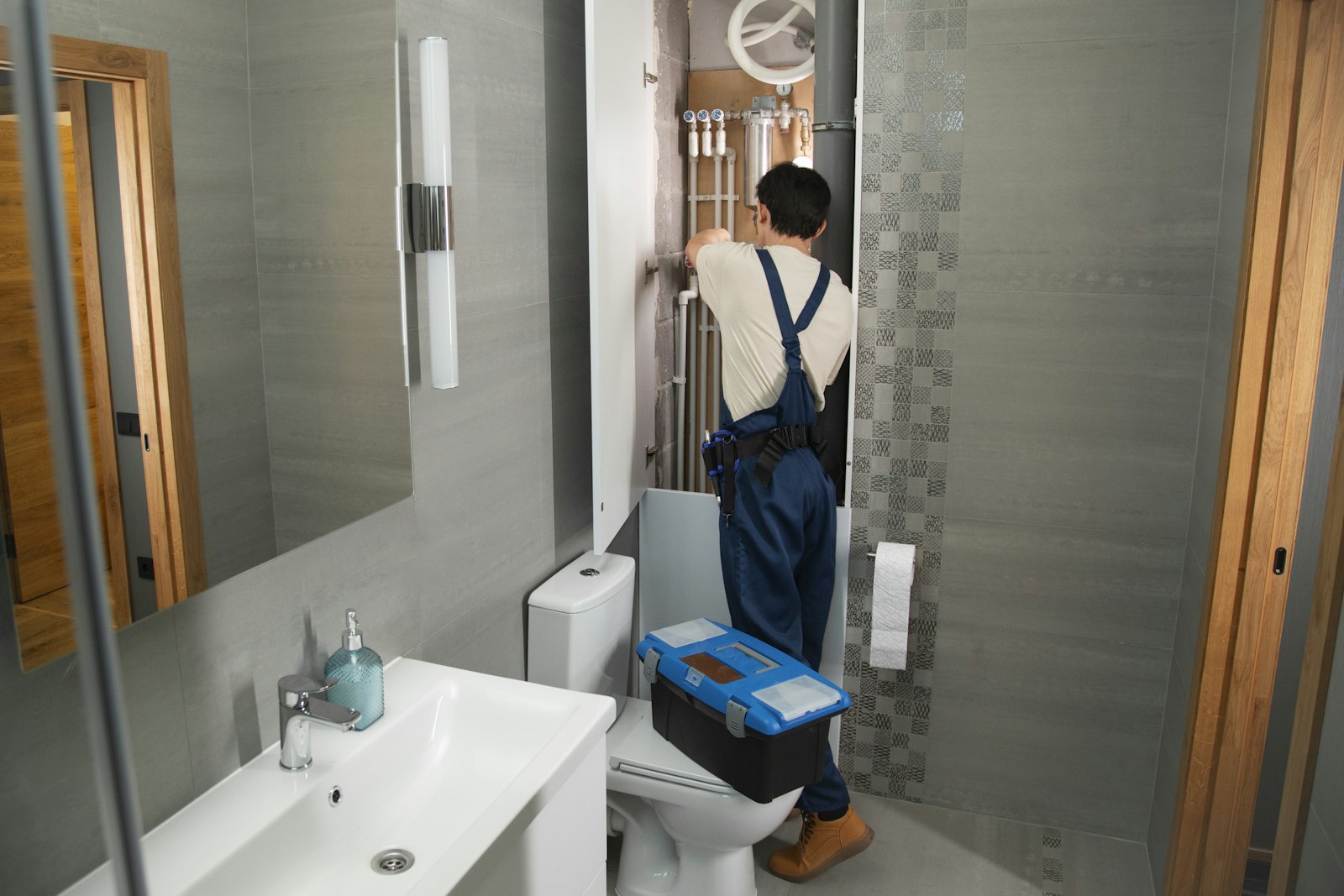
A sewage backup is the one kind of water damage that no Bothell homeowner should try to clean up alone. The water is Category 3, which means it carries bacteria, viruses, and parasites from human waste. It soaks into drywall, flooring, and framing fast, and it keeps getting worse while you decide what to do. This guide covers the first hour, who owns which part of the line in Bothell, what can be saved and what must go, how drying is verified with readings, and the prevention steps that actually work here. It is written for Bothell homes in ZIP codes 98011, 98012, and 98021.
Why Bothell homes get sewage backups
Bothell sits on a slope that drops to a river valley, and much of the flat ground near the Sammamish River and North Creek was wetland before it was built on. That geography shapes the three most common backup causes in town.
First, heavy rain. When a winter storm dumps rain on already saturated soil, the public sewer system takes in extra water through cracks, joints, and manholes. The flow surges, pressure rises in the main, and wastewater looks for the lowest opening. In a Bothell home that is often a basement floor drain, a ground floor shower, or a toilet on the lowest level. Our guide to Sammamish River and North Creek high water explains how the valley floor behaves in a storm, and the same storm that floods a yard can push a sewer main past its limit.
Second, old pipes. Homes built in the 1960s, 1970s, and 1980s around downtown Bothell and the older neighborhoods often still have clay tile or cast iron laterals. Clay joints separate over decades, tree roots find the moisture, and a root mass that started as a hairline intrusion becomes a full blockage. Cast iron corrodes from the inside, so the pipe looks fine from the yard and is rough and narrow inside. A backup that returns every few months in an older Bothell home is usually a pipe problem, not a drain problem.
Third, the wrong things going down the drain. Wipes labeled flushable do not break apart like toilet paper. Grease poured down a kitchen sink cools, hardens, and catches everything behind it. In a townhome or a home with a long lateral to the street, a grease and wipe plug can form in a section of pipe nobody ever sees, and the first sign is water coming up in the lowest fixture.
The first hour: do this, in this order
A sewage backup rewards fast, calm action and punishes hesitation. Work through these steps in order.
- Keep everyone out of the water. Do not let children or pets near it. If anyone has an open cut, keep it covered and away from the water, and wash hands thoroughly after any contact. Assume every drop is contaminated.
- Stop adding water. Do not flush toilets, run sinks, showers, dishwashers, or washing machines. Every gallon you send down a blocked line has to go somewhere, and the lowest opening is where it will appear. If a toilet is running, shut its supply valve.
- Shut off power to the affected area only if you can do it without stepping in the water. If the water is near outlets, appliances, or the electrical panel, stay out and leave the power alone.
- Take photos and a short video before anything is moved. Capture the water line on walls, the affected fixtures, damaged flooring, and any belongings in the water. These records matter for the insurance claim, and they are much harder to reconstruct later. Our guide to water damage and home insurance in Washington explains what a carrier usually asks for and why a water and sewer backup endorsement matters.
- Call for help. A sewage backup is not a mop and bucket job. Call a restoration crew that handles Category 3 water, and call your insurer the same day. Then call the sewer owner, because who owns the blockage decides who pays for the fix. That is the next section.
Do not use a household wet vacuum on sewage and do not pour bleach into standing sewage. Bleach mixed with the chemicals already in wastewater can release fumes, and it does nothing about the contamination soaked into porous materials.
Who owns the line: your lateral, their main
This is the part most Bothell homeowners only learn during a backup, and it matters because it decides who fixes the pipe.
Your lateral is the pipe that runs from your house to the public sewer main, usually under your yard and the street. In Bothell, the homeowner owns the lateral, including the part under the sidewalk and the street, all the way to the main. If the blockage is in your lateral, the repair is yours.
The public main is owned by the sewer utility. Which utility depends on where in Bothell you live, because Bothell is split between two counties and more than one sewer service area. Homes on the south side of town are generally served by the City of Bothell, while much of north Bothell in ZIP 98021 falls in the Alderwood Water and Wastewater District service area. A few pockets, especially on the Snohomish County side toward Bothell West, are on septic systems rather than a public sewer at all. If your home is on septic, the Snohomish County Health Department keeps the as-built drawings and service reports in its OnlineRME system, and those records show where your tank and drainfield are.
If sewage is backing up at several homes on your street, or if it surges during heavy rain even when your drains are clear, the blockage is more likely in the public main. Call the utility for your area and report it. They can check the main and tell you whether the problem is on their side. If only your home is affected, the blockage is most likely in your lateral, and a camera inspection will show exactly where.
Ask the crew to show you the camera footage and the distance reading. A root intrusion at 40 feet from the cleanout and a collapsed section at 85 feet are different repairs with different costs, and the footage is the evidence your insurer and the utility will both want.
Where the cleanout is, and why it matters
The cleanout is the capped pipe, usually white or black plastic, sticking a few inches out of the ground near the house or near the property line. It gives a crew direct access to the lateral without digging. Many Bothell homeowners do not know where theirs is until a backup happens, and then the crew spends the first hour looking for it under shrubs, bark, or a deck.
Find yours now, before you need it. Walk the side of the house where the main drain leaves the building, usually near the lowest bathroom or the kitchen, and look for a round cap at ground level. Mark it, keep it clear, and make sure a deck or planter does not cover it. If you cannot find one, the lateral may not have an accessible cleanout, which is common in some 1960s homes. That is worth knowing now, because a missing cleanout turns a simple cable clearing into a toilet pull or a roof vent job.
What can be saved, and what must go
Category 3 water changes the save or replace decision. Porous materials that soaked up sewage cannot be disinfected reliably, no matter how clean they look after washing.
What usually must go: carpet and pad in the affected area, drywall cut at least a foot above the visible water line, soaked insulation, particleboard furniture and cabinets that swelled, mattresses, and any paper or fabric items that sat in the water. Our guide to whether floors can be saved or replaced after water damage walks through the same decision for clean water, and the rule is stricter for sewage: when in doubt, it goes.
What can often be saved: hard surfaces such as tile, sealed concrete, and vinyl flooring once they are cleaned and disinfected; solid wood furniture that was only splashed and can be wiped down; metal and glass items; and contents that never touched the water. Anything you keep should be cleaned with a detergent first and then disinfected with a product labeled bactericidal, following the label exactly.
The drying itself is the same disciplined process as any water loss, and it is verified with readings, not with a guess. Moisture meters check the framing, subfloor, and wall cavities, and dehumidifiers run until the readings reach the dry standard for the material. A wall that feels dry on the surface can still be wet inside, and that hidden moisture is where mold starts. Our guides to crawlspace water damage drying and mold after water damage in Bothell explain the readings and the 48 hour mold window in detail.
Keep a separate record for every room and every item: photos, a list of what was discarded, receipts for anything replaced, and the drying readings. If the backup affected a shared wall in a townhome near Canyon Park or downtown Bothell, keep a separate record per address from the first hour, because the association, your policy, and possibly a neighbor's policy may all be involved.
Sump pumps, backwater valves, and the two devices that prevent the next backup
Two devices do most of the prevention work in Bothell, and both fail quietly if nobody checks them.
The backwater valve sits on the lateral and lets wastewater flow out but snaps shut when flow tries to come back in. It is the single best defense against a main surge pushing sewage into a low basement or daylight basement. Many older Bothell homes do not have one. If yours does, it needs cleaning at least once a year, because a valve stuck open with debris is the same as no valve at all. Ask a plumber to show you where it is and how to check it.
The sump pump protects the basement and crawlspace from groundwater, which is a different problem from sewage but often arrives in the same storm. A pump that has not run all summer can seize in the first big rain, a float switch can stick, and a discharge line can freeze or clog. Our guide to sump pump failure in Bothell basements and crawlspaces covers the full check: power, float, check valve, discharge route, and a bucket test before the wet season.
The two devices work together. A backwater valve stops sewage from coming in through the drain, and a working sump pump stops groundwater from rising through the floor. A home with only one of them is half protected.
Winter, roots, and grease: the Bothell prevention checklist
Most backups are preventable, and the prevention is unglamorous routine. Do these once a year, before the wet season starts in late October.
- Camera the lateral every two to three years, and every year if you have large trees near the line or a backup history. A 30 minute camera inspection is far cheaper than a backup cleanup.
- Treat roots in spring, not after a backup. A plumber can apply a root treatment through the cleanout, and the timing matters because roots grow fastest in the growing season.
- Never pour grease down the drain. Wipe pans with a paper towel and throw it away. Keep wipes, paper towels, and hygiene products out of the toilet, even the ones labeled flushable.
- Check the backwater valve and test the sump pump before the first big rain. Pour a bucket of water in the sump pit and watch the pump cycle, then check that the discharge is clear and running away from the house.
- In a freeze, protect the pipes that feed the lowest fixtures. A burst pipe and a sewage backup in the same week is the worst combination, and our guide to winter freeze and burst pipes in Bothell covers the freeze locations to check first.
- If water comes up in a shower or tub when a toilet is flushed, or in a floor drain when the washing machine runs, stop using water and call for a camera inspection. That cross fixture symptom means the blockage is downstream of both fixtures, and it will get worse, not better.
What to tell your insurer, and what to ask
Call your insurer the day of the backup, not after the cleanup. Tell them the water category, the rooms affected, and whether the cause is known. Ask three questions: does my policy include a water and sewer backup endorsement, and what is its limit; does the policy cover the lateral repair or only the resulting damage; and what documentation do you need from me and from the restoration crew. The answers decide whether you pay for a pipe repair yourself and whether the cleanup is covered, and they are different from the flood insurance question, which is a separate policy entirely. The Washington insurance guide on this site explains the endorsement and the flood gap in plain language.
If the blockage turns out to be in the public main, ask the utility for a written record of the report and their finding. That record supports the claim and it helps the next homeowner on the street, because a main problem that is never reported never gets fixed.
Questions about sewage backup in Bothell
Can I clean up a small sewage backup myself?
A small splash that never touched porous material can sometimes be handled with gloves, eye protection, detergent, and a bactericidal disinfectant, but a backup that reached flooring, drywall, or a crawlspace is not a DIY job. Category 3 water carries pathogens that a household cleaner cannot reliably remove from porous materials, and the drying needs commercial equipment and meter readings. If you are unsure, keep out and call a crew.
Why does sewage come up in the shower when I flush the toilet?
Because the blockage is downstream of both fixtures. Water from the toilet cannot reach the main, so it takes the path of least resistance and comes up through the lowest opening, which is often a shower or tub drain. Stop using water and get a camera inspection. Running more water only raises the level.
Who do I call first, the city or a plumber?
Call a restoration crew first if water is inside the home, because the cleanup cannot wait. Then call the sewer utility if more than one home is affected or if the backup surges during rain, because that points to the main. A plumber with a camera can tell you whether the blockage is in your lateral or the main, and that answer settles who pays for the repair.
Will my homeowners insurance cover a sewage backup?
It depends on your policy. A standard policy often excludes water that backs up through sewers or drains unless you added a water and sewer backup endorsement. That endorsement has its own limit, usually far below the dwelling limit. Flood insurance is separate again and covers rising water from outside, not a sewer backup. Check your policy before you need it, and ask your agent the three questions in the section above.
How do I stop it happening again?
Camera the lateral, fix what the camera finds, keep grease and wipes out of the drains, clean the backwater valve every year, and test the sump pump before the wet season. The most reliable prevention is a known pipe condition: a lateral you have seen on camera is a lateral you can plan for, and a lateral you have never seen is the one that backs up on a holiday weekend.
Related Bothell guides
- Sammamish River and North Creek high water
- water damage and home insurance in Washington
- whether floors can be saved or replaced after water damage
- crawlspace water damage drying
- mold after water damage in Bothell
- sump pump failure in Bothell basements and crawlspaces
- winter freeze and burst pipes in Bothell