
"How long will this take?" is the first question almost every Bothell homeowner asks after the water is out. It is also the question with the least satisfying short answer, because drying is not one job with one clock. A wet carpet in a living room can be dry in two days. A wet wall cavity in a Bothell winter can take a week, and a soaked crawlspace on the valley floor can take longer still. It is written for Bothell homes in ZIP codes 98011, 98012, and 98021.
This guide explains drying the way it actually works inside a Bothell home: what the normal timeline looks like for each material, what moisture readings mean and how a crew decides the house is dry, what slows drying down in our damp season, and what has to happen before repairs start. It is general information, not restoration advice. If water reached a wall cavity, insulation, or a subfloor, that is work for a trained crew with the right meters and equipment.
The Short Answer First
For a contained incident, where the water is found fast and stopped fast, mitigation, the drying phase before repair, typically takes three to five days. That number comes from the industry standard process, and it matches what most Bothell crews see on straightforward jobs: a burst supply line caught the same morning, a dishwasher leak found before it spread, a toilet overflow that stayed on tile.
But three to five days is the middle of the range, not a promise. Water inside a wall cavity, wet insulation, a saturated subfloor, or a crawlspace with standing water all push the timeline out. So does Bothell weather. From late October into April, the air outside is cold and damp, and damp air is slow air. A house that would dry in three days in August can take five or six in January, even with the same equipment running.
The U.S. Environmental Protection Agency says wet materials should be dried within 24 to 48 hours where possible, because mold can begin growing on damp materials in that window. That is the reason drying starts as soon as extraction is done, not after. The 24 to 48 hour window is about starting, not finishing. Finishing takes as long as the readings say it takes.
What "Dry" Actually Means
Dry does not mean the surface feels dry to your hand. A wall can feel dry on the outside while the back of the drywall and the studs behind it are still wet. That is the most common mistake homeowners make, and it is the reason professional drying is built around readings, not touch.
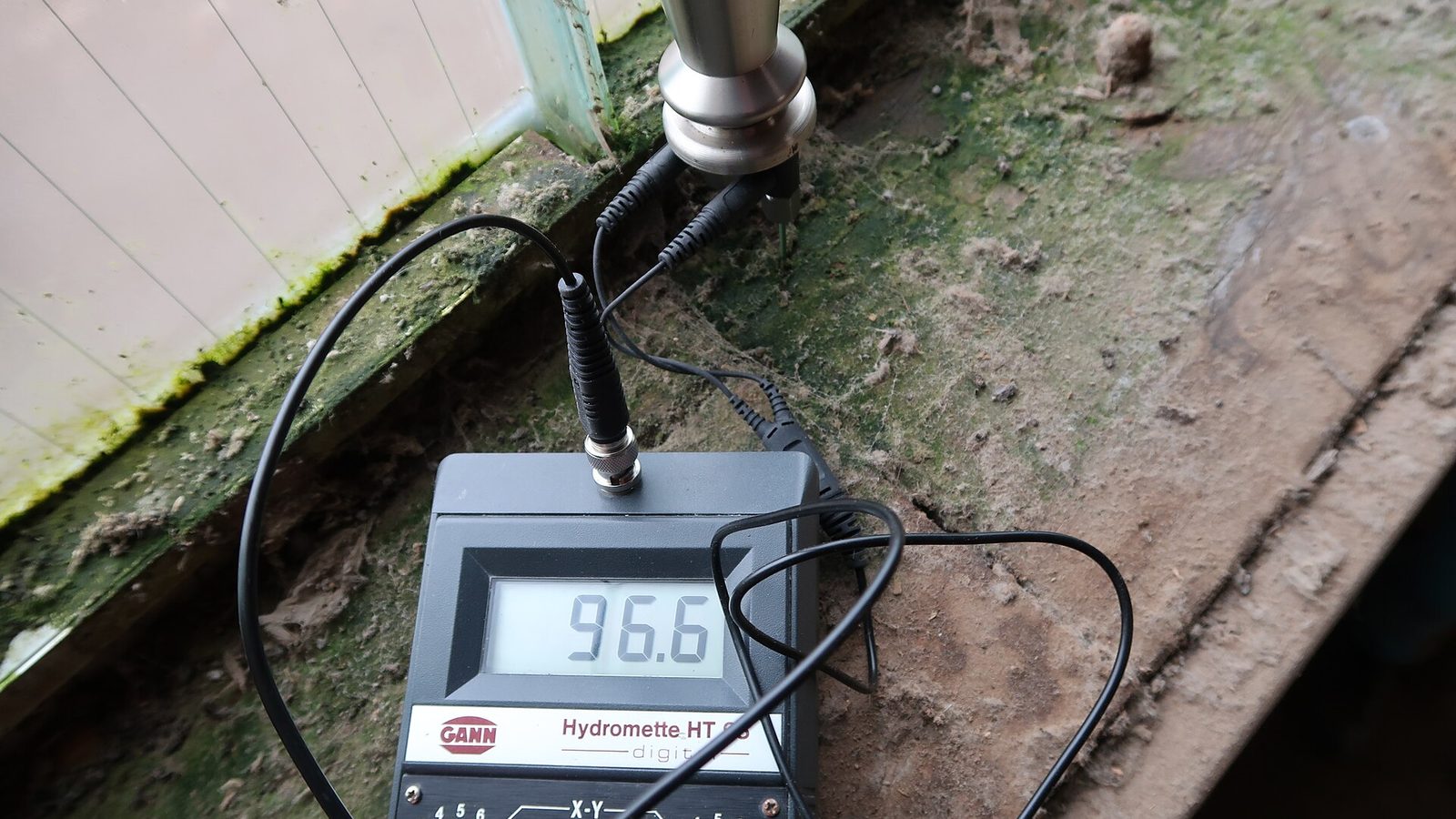
A crew measures moisture with meters. A pin meter pushes two small probes into wood and reads the moisture content as a percentage. A pinless meter reads through a surface without holes. A thermo-hygrometer measures the temperature and relative humidity of the air, and a thermal camera shows cold, wet patches behind a surface. Together, they build a moisture map of the house before any equipment runs, and the map is updated every day.
The target is called the dry standard. It is not zero, and it is not a single number for the whole house. It is the moisture level of the same material in a part of the house that was never wet. A crew takes readings from a dry room, or from dry material on the other side of the same wall, and that becomes the goal. Framing in a Bothell home might be dry at 10 to 12 percent moisture content. Drywall might be dry at a low reading on the meter scale. The point is the comparison: the wet material is dry when it matches the dry material, not when it reaches an arbitrary number on a chart.
Daily readings are the record that matters. A crew that logs readings every day can show you a trend, wet on Monday, lower on Tuesday, at standard on Thursday. That record is also what your insurer wants to see, because it proves the drying was verified, not guessed. Our insurance guide for Bothell explains what documentation to keep, and the daily reading log belongs at the top of that list.
The Timeline by Material
Different materials dry at very different speeds. Knowing this helps you understand why one room is done in two days while another is still running equipment on day five.
Carpet and pad dry fastest when the water was clean and the carpet can be lifted. With air movers and a dehumidifier, a wet carpet in a heated room is often dry in one to two days. The pad underneath is the problem. Pad soaks up water like a sponge, and if it stays wet, it holds odor and mold risk. In many cases the pad is removed and replaced while the carpet itself is saved. If the water was sewage or floodwater, carpet and pad are usually removed, not dried. Our sewage backup guide covers that decision in detail.
Hardwood floors dry slower, and the timeline depends on the finish and the subfloor. Surface water on a sealed hardwood floor can be wiped up fast. Water that gets under the planks, into the joints, or down to the subfloor takes longer, often four to seven days, and the floor may cup or crown while it dries. Cupping sometimes settles back as the wood dries, and sometimes it does not. The only way to know is to dry it to the standard and then wait for the wood to settle. Our floors guide explains which floors are usually saved and which are usually replaced, and why the decision is made from readings, not from appearance.
Drywall dries from the front and the back at different speeds. A small splash on a painted wall can dry in a day or two. Drywall that wicked water up from the floor, or that got wet from inside a wall cavity, can take three to five days, and often has to be cut. The industry rule is simple: wet drywall that cannot be dried to the standard in a reasonable time gets cut out. Cutting a foot or two above the water line is common, because the cut lets air reach the studs and the back of the remaining drywall. If the drywall is sagging, soft, or crumbling, it comes out, no matter what the meter says.
Insulation almost never dries in place. Fiberglass batts and cellulose hold water against wood and drywall for days, and they lose their insulating value when wet. The EPA guidance is to discard wet insulation. This is one of the reasons a roof leak or an upstairs appliance leak takes longer than it looks: the visible ceiling stain is only part of the job, and the wet insulation above it has to come out before the framing can dry.
Framing and subfloor are the slowest to dry and the most important to get right. A 2x4 stud or a plywood subfloor can take five to seven days or more, especially in winter. Wood dries slowly because water has to travel out of the fibers, and cold damp air slows that travel. This is also where readings matter most. A stud that reads wet on day five is not a failure. It is a stud that is still drying, and the equipment stays until the reading matches the dry standard.
Crawlspaces are Bothell's special case. Much of Bothell sits on the Sammamish River valley floor, and the water table rises with the winter rain. A crawlspace with standing water, wet insulation hanging from the floor joists, and a soaked vapor barrier can take a week or more, and the work starts with getting the water out, not with drying equipment. Our crawlspace drying guide covers the valley floor pattern in detail, including why pumping alone does not fix a crawlspace that keeps refilling from groundwater.
What Slows Drying Down in Bothell
Bothell has three drying enemies, and they all show up between late October and April.
The first is the air itself. Drying works by moving dry air across wet surfaces and pulling the moisture out of the air with a dehumidifier. When the outside air is cold and damp, every door opening and every air leak brings damp air back in. A crew will often seal off the wet area with plastic sheeting and run the dehumidifier inside that contained space, because drying one contained room is much faster than drying a whole house that is breathing damp winter air.
The second is the source. Drying cannot finish while water is still arriving. A slow supply line leak behind a wall, a roof leak that only shows in the next storm, a sump pump that keeps cycling in a high water table, all of these keep resetting the clock. If the source is not fixed first, the readings will not move, and that is actually useful information. Readings that do not fall are a signal to look for a source that is still open, not a signal to add more fans.
The third is hidden water. Water runs along framing, pipes, and joists before it shows up somewhere visible. A leak on the second floor can wet the ceiling below, the wall cavity beside it, and the subfloor under it, and each of those dries at a different speed. A thermal camera and a moisture meter find the hidden water before drying starts, and that is why a proper moisture map matters. Without it, a crew can dry the visible damage and miss the wet cavity next to it, and the mold shows up a month later in the place nobody checked.
What Happens Day by Day
Day one is extraction and mapping. Standing water comes out with pumps and extractors, the moisture map is drawn, wet material that cannot be saved is removed, and the equipment goes in. Air movers push dry air across wet surfaces. Dehumidifiers pull moisture out of the air. The equipment is loud, and it runs around the clock. That is normal, and turning it off at night adds a day or more to the job.
Days two and three are the working days. The crew returns, takes new readings, moves equipment to the spots that are still wet, and checks whether the source is fixed. This is the part homeowners rarely see: the readings are the job. If the numbers are falling steadily, the plan is working. If a spot is not moving, the crew looks for a reason, a hidden cavity, a missed source, a piece of equipment that is not reaching the spot.
Days four to seven are the verification days. When the readings reach the dry standard, the equipment comes out, and the crew takes final readings and photos. This is the point where many homeowners get impatient, because the house looks dry and the equipment is loud and in the way. But taking the equipment out early is the most expensive mistake in the whole process. A wall that is almost dry is still wet enough for mold, and the only way to know it is dry is the reading, not the look.
After drying comes repair, and repair cannot start until the readings are at standard. Drywall goes back, flooring goes back, paint goes on last. If repair starts on a wall that is still wet, the new drywall wicks the moisture up, the paint blisters, and the job has to be done twice. A crew that will not start repair until the readings are right is a crew doing the job properly, even if it feels slow.
How You Can Tell, Without a Meter
You do not need your own meter, but there are signs you can watch while the crew works.
Ask to see the readings. A good crew will show you the numbers and the dry standard they are aiming for, and they will explain why a spot is still running. If a crew cannot show you a reading, ask why.
Watch the dehumidifier. In the first day or two, a dehumidifier in a wet room pulls a lot of water out of the air, and the bucket or drain line shows it. As the room dries, the water coming out slows down. That slowdown is a real sign, but it is not proof. Only a meter reading on the material itself is proof.
Trust your nose, but do not rely on it. A musty smell that fades is a good sign. A musty smell that stays, or that gets worse after the equipment comes out, is a warning that something is still wet. Our mold guide explains what to do if that smell shows up, and why the first step is always to check the readings again, not to spray over the smell.
And watch the calendar against the season. If your drying job is happening in a Bothell January, expect the longer end of the range. If it is happening in August, expect the shorter end. The season does not change the standard, only the time it takes to reach it.
What to Do While the Equipment Runs
Keep the equipment running. Air movers and dehumidifiers are supposed to run around the clock, and turning them off at night or when you leave the house adds time. If the noise is a problem at night, ask the crew whether the equipment can be rearranged, but do not switch it off without asking.
Keep the contained area closed. If the crew put up plastic sheeting around the wet area, leave it up. Opening it lets damp house air in and slows the dehumidifier down.
Keep the heat on. Warm air holds more moisture than cold air, and a heated room dries faster than a cold one. In a Bothell winter, a crew may ask you to keep the thermostat at a normal temperature, not turned down to save energy while the equipment runs. The small extra heating cost is part of the drying job.
Do not start repairs yourself while drying is still going. Do not paint over a stain, do not put new flooring down, and do not close up a wall that is still drying. Repairs belong after the final readings, not before. Our floors guide and our winter freeze guide both cover the same rule from different angles: the repair waits for the reading.
Keep your records. Photograph the readings if the crew shows them to you, keep the daily log, and keep the final readings with your insurance file. If the claim is questioned later, the reading log is the document that proves the house was dried to a standard, not just left to air out.
Questions about drying in Bothell
How long does drying take after water damage in Bothell?
For a contained incident found and stopped fast, mitigation usually takes three to five days. Water in a wall cavity, wet insulation, a saturated subfloor, or a crawlspace on the valley floor takes longer, often five to seven days or more. In a Bothell winter, expect the longer end of the range because the air outside is cold and damp. The only honest answer for a specific house comes from the moisture readings, not from a calendar.
How do I know my house is really dry?
By the readings, not by touch or appearance. A crew measures the wet material with a moisture meter and compares it to the same material in a dry part of the house, which is the dry standard. The house is dry when the wet material matches the dry material, and the readings are logged every day to show the trend. A wall can feel dry on the outside while the back of the drywall is still wet.
Why is the drying equipment so loud, and can I turn it off at night?
Air movers and dehumidifiers run around the clock because drying is a continuous process. Turning them off at night lets the moisture climb back up, and adds a day or more to the job. If the noise is a problem, ask the crew whether the equipment can be moved or rearranged, but do not switch it off without asking. The noise is temporary, and a wall that is almost dry is still wet enough for mold.
What is a dry standard?
It is the moisture level of the same material in a part of the house that was never wet. A crew reads a dry room, or dry material on the other side of the same wall, and uses that as the goal for the wet material. Framing in a Bothell home might be dry at 10 to 12 percent moisture content. The standard is a comparison, not a single number, and it is different for drywall, wood, and concrete.
Can I start repairs while the house is still drying?
No. Repairs wait for the final readings. If new drywall or flooring goes in while the framing or subfloor is still wet, the new material wicks the moisture up, the paint blisters, and the job has to be done twice. A crew that will not start repair until the readings are at standard is doing the job properly, even if it feels slow.
Related Bothell guides
- Structural drying
- Water extraction vs structural drying
- Bothell crawlspace water damage drying
- Bothell Sammamish River and North Creek high water
- Bothell floors after water damage: saved or replaced
- Bothell winter freeze and burst pipes
- Bothell upstairs appliance leaks
- Bothell sump pump failure: basement and crawlspace
- Bothell roof leaks, moss, gutters, attic and ceiling
- Bothell mold after water damage
- Bothell sewage backup cleanup
- Water damage and home insurance in Washington